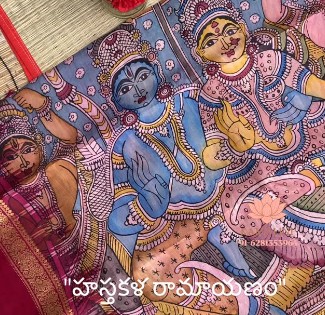
Pen Kalamkari
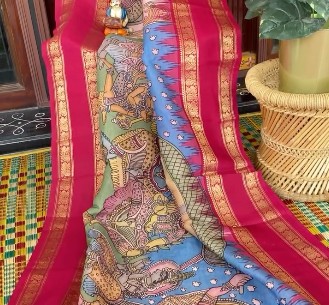
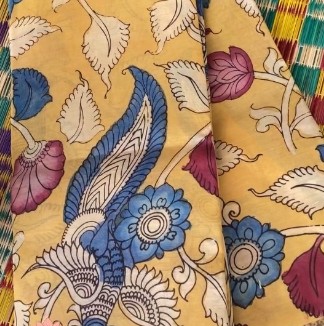
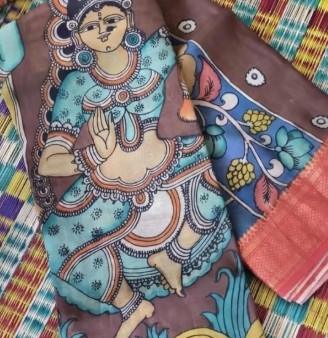
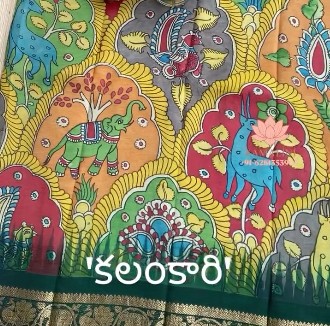
Intro & History: Pen Kalamkari is one of the oldest surviving forms of hand-painted textile art in India, originating primarily in Andhra Pradesh (Srikalahasti and Machilipatnam styles). The craft traces back over 3,000 years, with strong ties to temple traditions and later flourishing under Mughal patronage. The name comes from Persian "kalam" (pen) and "kari" (craft), reflecting the use of a pointed bamboo pen for intricate drawing.
Significance & Work: Artisans use natural dyes derived from plants, minerals, and metals, applied freehand with a kalam (pen) to create detailed mythological narratives, floral motifs, and epic scenes (often from Ramayana or Mahabharata). The process involves 23 meticulous steps, including mordanting, resist dyeing, and multiple layers of painting. GI-protected and eco-friendly, Pen Kalamkari sarees carry deep spiritual and cultural meaning — ideal for temple ceremonies, festive occasions, or as heirloom pieces that preserve storytelling through textile art.